Getting an autism assessment in Goa: what the process looks like
From "something feels different" to a real appointment — who to see first, what it costs, and what happens after.
In short
- Who assesses
- A clinical psychologist or child psychiatrist — often alongside a speech-language pathologist or occupational therapist for a fuller picture.
- Where it's free
- District Early Intervention Centres, for ages 0–18.
- What to bring
- Basic ID and a written developmental history — what you've noticed, and since when.
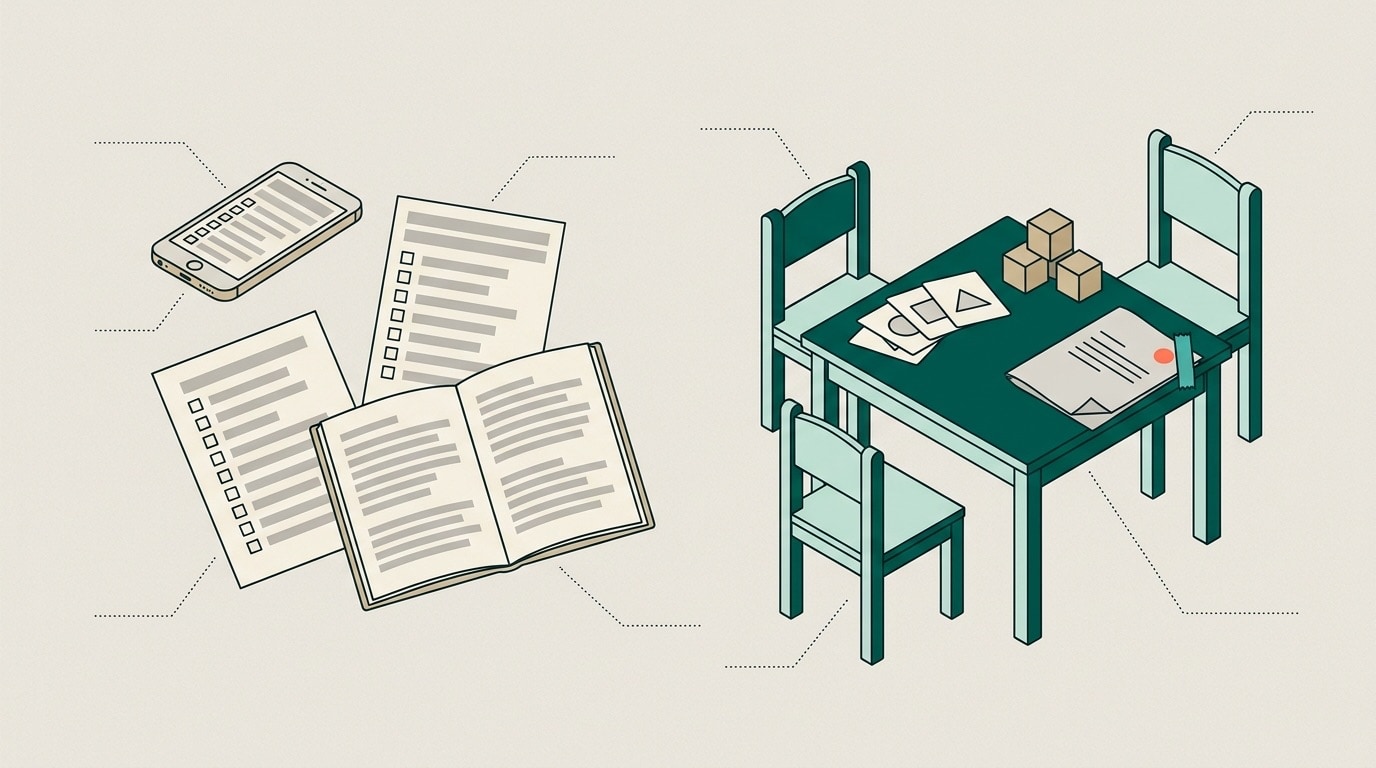
Online checklists and school observations are a reasonable first signal, but they aren't a diagnosis. A formal assessment means sitting with a qualified professional — a clinical psychologist or child psychiatrist — who uses a structured, validated tool rather than a conversation and a hunch. That distinction matters later: schools, insurers, and government schemes only recognise the second kind.
Government-run District Early Intervention Centres screen children from birth to 18 at no cost, under the national RBSK programme — the tradeoff is usually a longer wait. A private clinical psychologist or psychiatrist moves faster and costs more, but the outcome is the same kind of report either way, and both are recognised for what comes next.
A diagnostic report is the document that turns rights into something you can use — it's what a UDID application is built on, what a school needs to legally accommodate your child, and what schemes like Niramaya check for at enrollment. It's paperwork, not a verdict.
Researched Aug 2026. General information, not legal advice. Rules and amounts change, so check with the office or the latest notification before you act.
Ready to find someone?
Search specialists near you.
Not sure where to start? Message us on WhatsApp and we'll help you look.